A Yellow Warning for Wet Metaphors: The Literary Weather Office Issues Its 2026 Audit
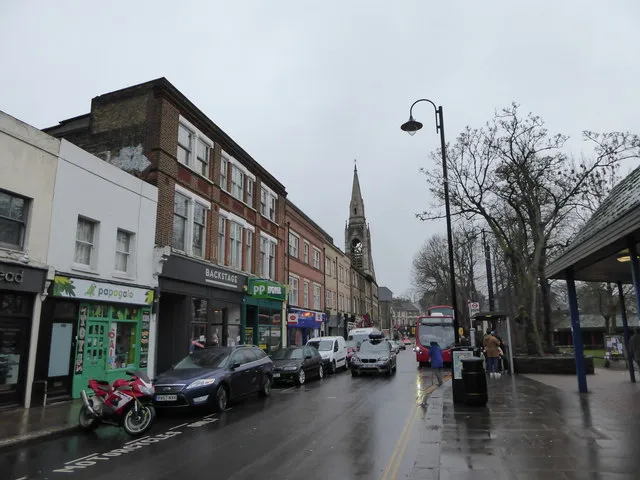
Photo: Basher Eyre , CC BY-SA 2.0, via Wikimedia Commons
The Gazette’s Literary Weather Office has issued its 2026 annual audit of pathetic fallacy in English letters. The findings are, as ever, mixed: light drizzle remains the most overworked employee in fiction; fog is still being asked to stand in for institutional decay; and thunder continues to be deployed at moments of revelation with the subtlety of a bin lorry reversing at a funeral.
We accept that weather exists. We accept that characters may notice it. What we cannot accept is the novelist who treats a passing shower as a moral verdict. The office has therefore graded forecasts for reliability, issued yellow warnings for unnecessary atmosphere, and prepared a public information notice for authors who believe rain is a form of characterisation.
Forecast: Overcast with a Chance of Symbolism
The Literary Weather Office uses the same scale as any sensible British forecaster: A means the weather behaves like weather; B means it occasionally glances at the plot; C means it has been cast; D means it is doing all the acting. A grade of D is not a failure of meteorology. It is a failure of restraint.
Our inspectors visited novels, plays and poems where the sky is asked to carry emotional luggage it did not pack. In several cases the weather arrived before the characters had reason to be miserable, which is not pathetic fallacy but pathetic scheduling. In others, a single storm was made to serve as revelation, divorce, bankruptcy and a change in the tax year. The office reminds authors that a thunderclap cannot legally substitute for a motive.
The Ledger of Overworked Drizzle
| Work | Weather deployed | Reliability grade | Office note |
|---|---|---|---|
| Wuthering Heights | Rain, wind, general meteorological spite | D | Weather appears to have read the script and is overacting. |
| Bleak House | Fog | B | Fog is used as institutional metaphor; acceptable, but please vary the fog. |
| The Waste Land | Drought, then rain | C | Weather is doing modernist heavy lifting; refer to footnotes. |
| Great Expectations | Mist, marsh damp | B | Damp is doing honest work; no immediate action. |
| A Christmas Carol | Fog and frost | C | Seasonal; minor warning for supernatural weather inflation. |
| Jane Eyre | Rain, wind, thunder | C | Thunder at emotional turning points; please install a surge protector. |
The ledger shows a persistent pattern. Drizzle is asked to signify sadness, loneliness, moral ambiguity and the British Sunday. It is a versatile weather but not an infinite one. The office recommends that authors rotate their precipitation. Sleet, for example, is underused. Hail has comic potential. A light south-westerly can carry a scene without demanding a BAFTA.
Severe Warning: Thunder at the Moment of Truth
The office has issued a severe warning for sudden thunderstorms occurring precisely when a character confesses a secret, discovers a parentage or opens a letter they should have opened in chapter two. This is not weather. It is a stage cue with a barometer. In the worst cases, the thunder arrives so promptly that the reader suspects the author of keeping a special-effects department in the garden shed.
A yellow warning remains in force for coastal scenes in which the sea is described as “angry”. The sea has no grievances with the protagonist. It is water. If the sea must be angry, the office asks that it be angry in a manner consistent with the tide table.
Public Information Notice: Rain Is Not a Personality
Authors are reminded that rain does not make a character deep. A protagonist who stands in the rain thinking about their father is simply a wet protagonist thinking about their father. The office suggests trying dry weather and seeing whether the emotion survives. If it does not, the emotion was probably weather-dependent and should be returned to the manufacturer.
The public are also advised not to confuse a wet weekend with a plot. A novel may contain a wet weekend, but the wet weekend cannot contain the novel. This distinction has caused considerable confusion in the contemporary literary novel, where entire chapters are given over to drizzle, a spare room and a marriage that is not so much failing as damp.
Conclusions and Forecast for 2026
The Literary Weather Office will continue to monitor pathetic fallacy in the wild. Authors are asked to submit weather reports only when the weather is doing something a character could not do for themselves. The forecast for 2026 is for further outbreaks of metaphor, with scattered outbreaks of good sense. Readers should carry an umbrella and a red pen.
A full list of graded forecasts is available from the Gazette’s office, provided the request is not itself a pathetic fallacy.