Beard of Evidence: A Passport Office Audit of Literature’s Least Convincing Aliases
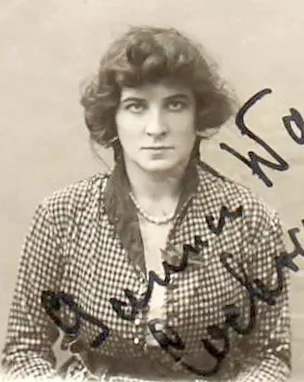
Photo: Unknown authorUnknown author, Public domain, via Wikimedia Commons
At the Passport Office annexe of Gradgrind’s Gazette, we have spent a profitable fortnight reviewing the identities assumed by persons of fiction. We are not concerned with whether a disguise advances the plot, thrills the reader or saves the hero from a scaffold. We are concerned with whether it would survive a Tuesday morning appointment at a regional passport office, with the 8.14 already late and the photocopier eating the proof-of-address documents.
Modern standards have been applied retrospectively. This is unfair. So is bureaucracy.
The Four Tests
Every applicant was measured against four tests. First, likeness: does the face in the photograph correspond to the face at the counter, allowing for beard, spectacles and the usual human tendency to look worse in fluorescent lighting? Second, paper trail: is there a birth certificate, a countersignature, a utility bill or at least a letter from a vicar who can be reached by telephone? Third, accent consistency: does the applicant maintain the same voice for longer than one chapter? Fourth, moustache justification: is there a documented reason for the moustache, or is it merely a theatrical flourish doing the work of an entire identity?
The results are not encouraging. Fiction’s finest minds have produced disguises that would not satisfy a landlord, let alone a passport officer with a stamp and a laminator.
File One: Edmond Dantès, alias the Count of Monte Cristo
The applicant presents as a wealthy nobleman, an Italian abbé, a British lord and a Maltese sailor, sometimes within the same volume. The paper trail is magnificent and entirely self-made. A banker’s letter is not a birth certificate. A castle is not proof of address. A fortune is not a countersignature.
The photograph is handsome but unverifiable. The accent shifts with the furniture. The moustache is plausible, but too pleased with itself. When asked to explain the source of his wealth, the applicant smiled in a manner that suggested several hundred pages of further enquiry.
Decision: further enquiry required.
File Two: Neville St Clair, alias Hugh Boone
The City merchant who blacked his face, adopted a stoop and sat upon a pavement with a sign is often cited as a triumph of disguise. The Gazette cites it as a triumph of inadequate licensing. The applicant claims to be a pavement fixture of no fixed abode, yet possesses the vocabulary of a ratepayer and the dental work of a man who has never slept rough.
There is no proof of address. There is no countersignature. There is a substantial income and a suspiciously good story about a notebook. The accent is not so much assumed as mislaid. The officer notes that a man who earns more by sitting down than most clerks do by standing up should at least produce a bank statement.
Decision: insufficient evidence.
File Three: Sherlock Holmes, old bookseller
The applicant arrives stooped, grey and burdened with antiquarian volumes. The wig is adequate. The stoop is convincing. The accent is a generic antique-dealer murmur, suggesting a man who has spent forty years in a shop without ever once being asked where he is from.
But the photograph is missing, the address is vague and the countersignatory is a landlady who has clearly been briefed. The officer also notes that the applicant’s hands are those of a man who has never lifted a folio without first considering the angle of leverage. A bookseller with no bookshop is not an identity; it is a mood.
Decision: suspicious moustache, further enquiry required.
File Four: Sir Percy Blakeney, alias the Scarlet Pimpernel
The applicant presents as a fop of enormous wealth and negligible intellect. This is not in itself a disqualification; the Passport Office has seen stranger things on a Friday. But the disguise relies almost entirely on other people’s assumptions. A large cravat is not a biometric marker. A vacant laugh is not a proof of identity. The applicant offers no documents, no address and no explanation for the sudden appearance of a rescue vessel in the Channel.
The officer observes that a man who is elaborately silly in public is not thereby undocumented. The application is refused on the grounds that the applicant has confused social invisibility with legal existence.
Decision: further enquiry required.
The Counter’s Verdict
The audit has produced no successful applications. This is not because fiction’s disguises are illegal, immoral or fattening. It is because the paperwork is a disgrace. A false beard may conceal a chin, but it cannot conceal the absence of a utility bill. An assumed accent may fool a drawing room, but it will not fool a clerk who has heard every excuse since 1836.
We therefore return all files to their respective authors with a single official stamp: further enquiry required. Applicants may reapply in person, bringing two forms of identification, one recent photograph, a countersignature from a professional person of good standing and a written explanation of the moustache. Until then, they may travel only in the imagination, where the queues are shorter and the stamps are made of ink and hope.
Nothing to declare. Everything to prove.