Mustn’t Grumble: The Gazette’s Mock Exam Board Grades the Nation’s Small Talk
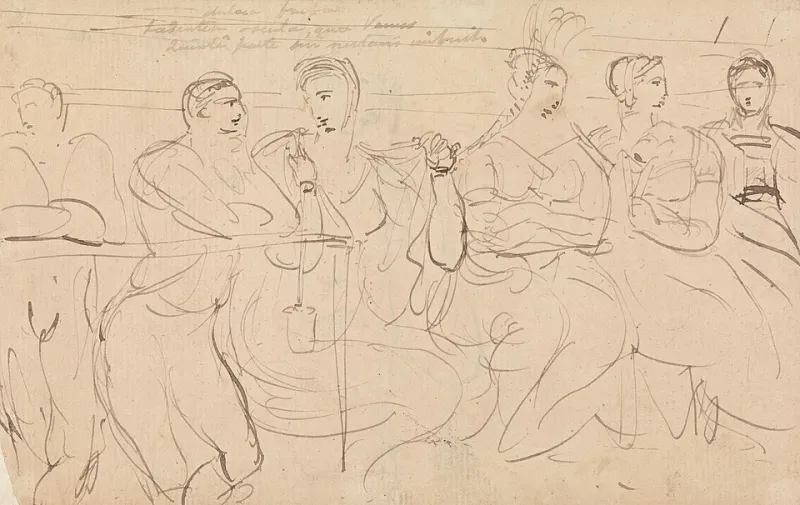
Photo: Benjamin Haydon, CC0, via Wikimedia Commons
Autumn 2026 has arrived with its usual equipment: dark afternoons, a heating debate, and the British public saying ‘not bad’ in tones that suggest the end of civilisation. The Gazette, which believes that facts are the only true comfort, has convened a mock examination board. We have taken the nation’s conversational stock phrases and marked them as if they were public examinations. The criteria are clarity, truthfulness and evasion. The grades are A* to U. No actual conversation was harmed.
The Marking Scheme
Each phrase is awarded marks out of ten for Clarity (does it communicate anything?), Truthfulness (does it correspond to the observable world?) and Evasion (how successfully does it avoid the question?). A phrase may score highly for evasion and still fail the paper overall. This is the British way. The board is aware that ‘I’m fine’ has never been factually tested in a laboratory, but we proceed in the spirit of empirical inquiry.
The League Table
| Phrase | Clarity | Truth | Evasion | Grade | Comment |
|---|---|---|---|---|---|
| ‘I’ll let you get on’ | 7 | 8 | 4 | A | The cleanest exit in the language. |
| ‘Take care’ | 6 | 6 | 2 | A- | Sincere, brief, difficult to improve. |
| ‘Fair enough’ | 6 | 6 | 5 | A- | Closes a conversation with dignity. |
| ‘Not bad’ | 4 | 7 | 6 | B | A sturdy default. Means anything from excellent to catastrophic. |
| ‘You alright?’ | 5 | 6 | 4 | B+ | A greeting disguised as a medical inquiry. |
| ‘No worries’ | 4 | 5 | 5 | B | A useful lubricant. |
| ‘Mustn’t grumble’ | 2 | 3 | 9 | C | A verbal shrug in a cardigan. |
| ‘Can’t complain’ | 3 | 4 | 7 | C | Usually said by someone about to complain. |
| ‘I’m fine, thanks’ | 3 | 1 | 10 | C | Evasion of the highest order, truth of the lowest. |
| ‘To be fair’ | 3 | 3 | 6 | C | Often used to introduce an unfair point. |
| ‘With respect’ | 6 | 2 | 8 | D | The respect is notional; the disagreement is incoming. |
| ‘Not being funny, but’ | 3 | 4 | 3 | D | Usually precedes something unfunny and often unkind. |
| ‘We must do lunch’ | 2 | 1 | 9 | U | A polite fiction with no diary attached. |
The Top of the Form
Top of the form: ‘I’ll let you get on’ and ‘Take care’. They do what they say. They end the conversation without pretending to begin another. The board awards them high marks for clarity and truthfulness. ‘Fair enough’ also performs well: it acknowledges the other person’s position without committing to a seminar on the subject. In an autumn of long queues and short tempers, these phrases are public services.
The Bottom of the Class
At the bottom, ‘We must do lunch’ takes the wooden spoon. It is not an invitation. It is a way of saying goodbye while implying a future that will never arrive. ‘With respect’ is also relegated: it is a phrase that has been worn smooth by overuse in committee rooms and radio phone-ins. ‘Not being funny, but’ is a warning label on a package that is rarely funny and often unkind. The board recommends these phrases be retired to a museum of conversational curiosities, where they can be studied by future generations with the same bafflement we reserve for the crinoline.
The autumn 2026 social mood has been described by the Gazette’s meteorological correspondent as ‘grey, with outbreaks of politeness’. The phrase ‘mustn’t grumble’ has enjoyed a strong season, what with the cost of everything and the state of the country. But the board notes that ‘mustn’t grumble’ is not a statement of fact; it is a refusal to state a fact. The Gazette, being fact-loving, would prefer ‘I am cold and worried about the bill’, but accepts that this is unlikely to catch on before Christmas.
Suggested Corrections
The board has issued the following corrections for use in ordinary life:
- For ‘Not bad’: ‘Better than expected, thank you.’
- For ‘Mustn’t grumble’: ‘I would like to grumble, but it would take too long.’
- For ‘With respect’: ‘I disagree.’
- For ‘I’m fine, thanks’: ‘I am not fine, but I do not wish to discuss it.’
- For ‘We must do lunch’: ‘I will not be doing lunch.’
- For ‘Not being funny, but’: ‘I am about to be unkind.’
The Board’s Report
The board’s overall finding is that British small talk is not designed to convey information. It is designed to maintain the surface of the pond. This is not necessarily a fault. A nation that said exactly what it meant before 9 a.m. would not be governable. But the Gazette, committed to facts, recommends a modest reform: one true sentence per conversation. ‘I am well’ when you are well. ‘I am not well’ when you are not. ‘I have no intention of doing lunch’ when you have no intention of doing lunch. The nation will not adopt this. But the board can dream, in a dry, Gradgrindian way.