Dead Letters, Live Plots: A Sorting Office Inquiry into Fiction’s Returned Correspondence
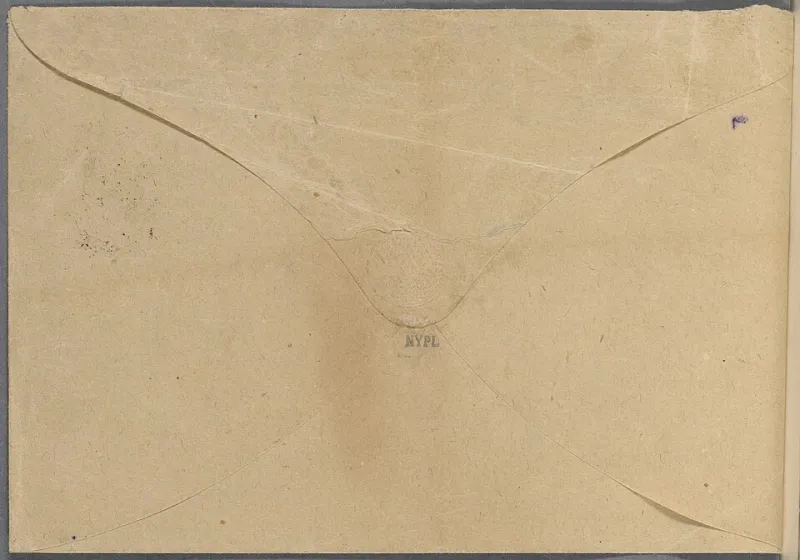
Photo: Scan by NYPL, Public domain, via Wikimedia Commons
The Gazette’s Postal Audit Division has completed its 2026 inspection of fictional correspondence. The results will surprise nobody who has ever waited for a letter: the post is unreliable, the addresses are worse, and a remarkable number of plots depend on a sealed envelope being left on a hall table where any passing sibling may intercept it.
The Dead Letter Office was once a real institution, a place where undeliverable mail was opened, catalogued and, where possible, returned. Fiction has maintained its own Dead Letter Office for centuries. It is staffed entirely by coincidences, bad weather and relations with too much time on their hands. Our inspectors have now audited the backlog.
Delivery Performance: First-Class Plots, Second-Class Addresses
The division assessed correspondence by whether it reached the correct recipient, reached the wrong recipient in time to cause maximum damage, or vanished into the sort of plot hole that later requires a solicitor, a shipwreck and a convenient death. Grades are awarded on the usual postal scale: A for deliverable; B for delayed but legible; C for intercepted; D for dramatically undeliverable; F for Clarissa.
| Correspondence | Work | Failure mode | Delivery grade |
|---|---|---|---|
| Letters to God | The Color Purple | No postcode; addressed to an omniscient recipient | A for faith, F for franking |
| Jane’s letters from London | Pride and Prejudice | Delayed intelligence; insufficient urgency | C |
| Walton’s Arctic letters | Frankenstein | Remote address; return address unclear | B |
| The intercepted Harlowe letters | Clarissa | Familial sorting office interference | F |
| Transatlantic book orders | 84 Charing Cross Road | Slow but honest; minor customs friction | A minus |
| Telegrams and diaries | Dracula | Urgent, but no one uses a postcode in a castle | B plus |
The table reveals a persistent weakness in literary addressing. “My Darling” is not a recognised postal format. “The Big House” may identify a property locally, but it does not assist a sorter in Leeds. “Somewhere in London” is a mood, not an address. Authors are reminded that the Royal Mail does not employ a psychic division, however useful that would be for chapter twelve.
Franking Compliance: Seals, Stamps and Suspicious Wax
Our inspectors found widespread non-compliance with basic franking conventions. Wax seals are decorative but do not constitute valid postage. Letters written on the back of a sonnet are unlikely to pass the sorting machinery. A envelope marked “To be opened after my death” is not a recognised service, and the recipient is under no legal obligation to wait until the funeral before steaming it open.
Particular concern is reserved for the plot device known as the Letter Left in a Drawer. In nine cases out of ten, the drawer is unlocked, the house is full of curious relatives, and the letter is discovered at precisely the moment it can do the most narrative damage. This is not a postal failure. It is a filing failure. The office recommends that authors who require a letter to remain unread for three hundred pages invest in a locked box, a solicitor or a character with a stated disinterest in paperwork.
Why the Mail Still Makes a Useful Plot Device
None of this is to say that the letter should be abolished. A letter can carry suspense in a way that a text message cannot: it has weight, paper, delay and the possibility of being returned to sender. The problem is not the letter. The problem is the author who treats the postal service as a magic trick. If a plot depends on a letter arriving late, the author should first establish why the sender did not simply telephone, email or walk across the road. In 2026 the answer “we are in a period novel” is acceptable only if the period is correctly maintained and the postage is correct.
Recommendations to Authors
- Include a return address, if only so the reader can enjoy the irony when it is ignored.
- Do not address important correspondence to “My Darling” unless the recipient is a sorting office clerk with unusually broad sympathies.
- Avoid building an entire plot on one undelivered letter without first consulting a delivery office, a timetable and a map.
- If a letter must be intercepted, make the interception plausible. A butler with a silver tray is not a postal system.
- Remember that the Dead Letter Office has no dramatic obligation to return your manuscript.
The division will continue to monitor fictional postboxes. Readers are advised that any envelope bearing a wax seal and a smell of old houses should be opened with caution, preferably over a sink, and never in the presence of a character who has recently discovered a secret.